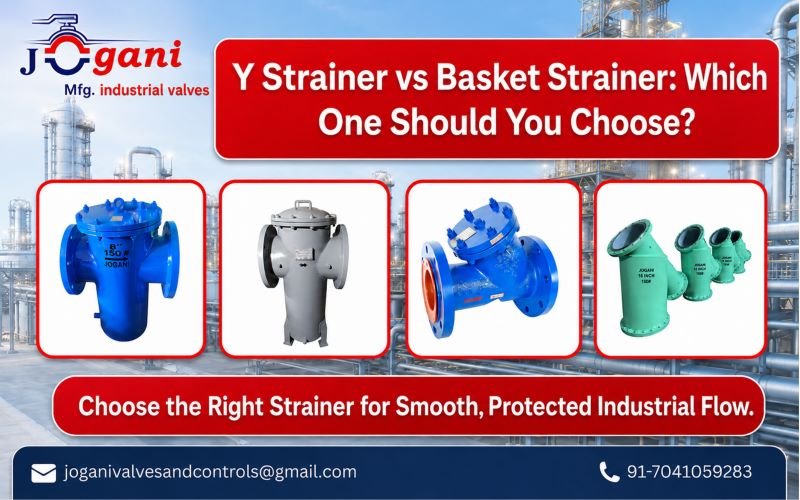
How to Choose Between Y Strainer and Basket Strainer
Choosing a pipeline strainer can look like a small procurement decision. However, the wrong design can restrict flow, increase maintenance, and expose pumps, control valves, and heat exchangers to debris. In a Y Strainer vs Basket Strainer decision, price alone should not lead the choice. Engineers need to consider pipe size, contamination level, fluid properties, required flow, and cleaning access.
A compact utility line may work well with a Y type design. Conversely, a high-flow process line with regular debris may benefit from a basket strainer. This guide explains the Difference between
Y Strainer and
Basket Strainer in practical terms, helping buyers protect equipment without creating avoidable pressure loss or downtime.
Start With the Dirt Load in Your Line
A Y Type Strainer uses an angled body and a compact screen chamber. It suits lines with light-to-moderate contamination and limited installation space. A Basket Strainer uses a larger removable basket that holds more solids. Therefore, it is better for lines that collect scale, rust, or process particles between service intervals.
Y Strainer vs Basket Strainer Comparison: Flow and Pressure
Y Strainer vs Basket Strainer flow rate differs most when debris starts accumulating. A Y strainer may show a higher Y Strainer pressure drop because its screen area is smaller.
On the other hand, a basket design gives more open area and lower resistance. Confirm flow, allowable pressure loss, and mesh size before specifying either design.
Match the Strainer Design to Actual Duties
Y Type Strainer Applications
Y Type Strainer applications include compact steam, water, oil, and utility lines. Install them before small pumps, pressure-reducing valves, steam traps, and meters. For this reason, they offer a practical pipeline strainer for pump protection when debris loading stays moderate.
Basket Strainer Applications
Basket Strainer applications include cooling water, chemicals, food processing, water treatment, and larger process-fluid lines. The large basket makes cleaning easier and extends service intervals. In many cases, this design suits plants that must maintain flow while handling heavier dirt loads.
Material and Fit-Up Decide Service Life
Body material must match fluid chemistry, operating pressure, and temperature. Carbon steel suits many general services, while stainless steel offers stronger corrosion resistance.
Moreover, match perforation, mesh opening, flange standard, and cover sealing to the duty. Correct fitment prevents leakage, particle bypass, and early screen damage.
Plan Strainer Cleaning and Maintenance Early
Strainer cleaning and maintenance should be considered before the purchase order is released. Ensure operators have enough clearance to remove the basket or open the Y-strainer cap safely.
Where practical, add pressure gauges or differential-pressure points to identify fouling early. As a result, teams can clean the screen before pump performance falls or a shutdown becomes necessary.
Give Your Supplier a More Useful Specification
For industrial pipeline strainer selection, nominal bore and price are not enough. Share the fluid, temperature, pressure class, maximum flow, particle type, connection standard, installation direction, and cleaning frequency. Along with this, request drawings and material or inspection documents for bulk orders. Ahmedabad buyers can discuss the right configuration with Jogani Valves And Controls before finalizing a model.
Conclusion
The
Y Strainer vs Basket Strainer choice becomes simple when you assess debris load, flow, pressure loss, and cleaning access together. Choose a Y design for compact, lighter-duty lines and a basket design for higher flow or more solids. Contact
Jogani Valves And Controls with your operating details for size, material-grade, or bulk-quotation guidance.
Frequently Asked Questions