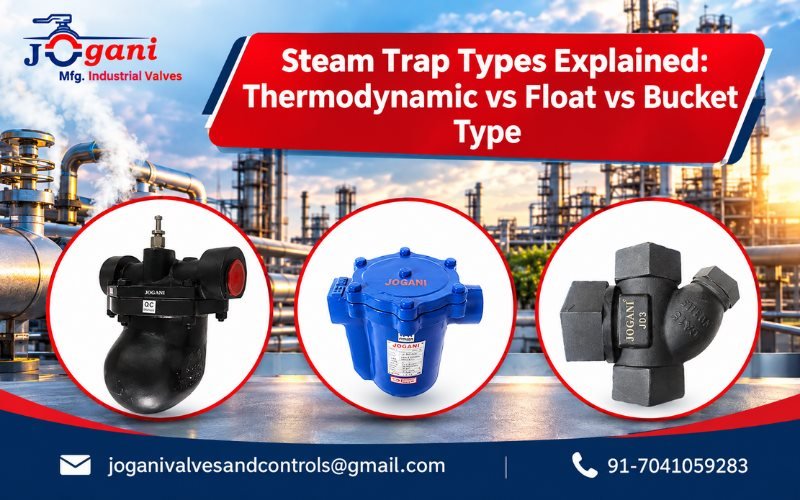
Thermodynamic vs Float vs Bucket Steam Trap: Key Differences
Steam trap selection directly affects steam efficiency, equipment performance, and maintenance costs. Yet many plant teams still compare traps mainly by price or connection size. The better approach is to match the trap with operating pressure, condensate load, installation conditions, and process requirements.
The main Steam Trap Types used in industrial systems include thermodynamic, float, and inverted bucket designs. Each works differently and suits different applications. A thermodynamic steam trap is often preferred for robust steam-line drainage, while float and bucket traps can offer advantages in process equipment.
Jogani Valves And Controls, based in Ahmedabad, manufactures and supplies steam-system products for industrial applications.
Start with the Working Principle, Not the Price
Steam traps remove condensate and unwanted air while retaining live steam. Their operating principle determines how they behave under changing loads and pressures.
Thermodynamic Steam Trap
A Thermodynamic Steam Trap works through fluid-dynamic effects and the behaviour of flash steam. It is compact, comparatively simple, and well suited to demanding steam-line service. Thermodynamic traps are also widely considered robust for exposed installations.
For steam mains, outdoor drainage, and applications where freezing may be a concern, this design can be a practical choice.
Float Steam Trap
A float trap responds to the density difference between steam and condensate. As condensate enters, the float rises and opens the discharge valve. Modern float-trap designs can also provide automatic air venting.
This makes the float steam trap particularly useful where condensate loads vary significantly. It can handle light and heavy loads and suits many heat-transfer applications.
Inverted Bucket Steam Trap
An Inverted Bucket Steam Trap uses an inverted bucket that becomes buoyant when steam enters the trap. The movement of the bucket controls condensate discharge.
This design can withstand high pressures and offers good resistance to waterhammer. However, air venting and installation conditions need careful attention. Superheated steam applications may also require a check valve arrangement.
Where Material and Manufacturing Quality Make a Difference
A steam trap operates under pressure, temperature, and repeated thermal cycling. Therefore, material selection and manufacturing accuracy matter as much as the basic design.
Buyers should check the body material, internal components, pressure-temperature suitability, connection standard, sealing arrangement, and overall finish. Consistent machining and proper inspection can reduce leakage, premature wear, and maintenance interruptions.
Jogani Valves And Controls states that it is an ISO 9001:2015 certified engineering company established in Ahmedabad in 2013. Its product range includes steam traps alongside industrial valves and strainers.
Common Selection Mistakes Plant Teams Should Avoid
One common mistake is selecting a trap only by pipe size. Trap capacity depends on the actual condensate load and differential pressure.
Another mistake is overlooking the installation environment. A trap installed outdoors may face freezing conditions, while process heaters can experience large variations between start-up and normal operation.
For this reason, procurement teams should share operating data before requesting a quotation. Useful details include steam pressure, equipment type, inlet and outlet pressure, estimated condensate load, connection size, and service temperature.
Choosing a Trap for Different Industrial Applications
Different industries place different demands on steam systems. Chemical and pharmaceutical plants often need dependable process heating and careful material selection. Textile and food-processing plants may have multiple heating points with changing loads.
Heat exchangers, evaporators, reboilers, separators, steam mains, and process heaters can all require different trap arrangements. For example, guidance for evaporators and reboilers commonly favours float-thermostatic traps because they handle changing condensate loads and support effective air removal.
A Practical Buying Checklist for Ahmedabad and Gujarat Buyers
Before placing a bulk order, ask the supplier for clear technical details rather than relying on a generic catalogue description.
Check the required trap type, pressure range, temperature range, connection size, material, flow capacity, and installation orientation. Also confirm whether the supplier can support your specific process conditions.
For buyers in Ahmedabad and across Gujarat, working with a local industrial supplier can simplify technical discussions, quotation follow-up, and replacement planning. Jogani Valves And Controls operates from Rakhial, Ahmedabad, and supplies industrial valves, strainers, and steam-related flow-control products.
Why Thermodynamic Traps Remain a Strong Industrial Option
A
thermodynamic design can be a smart choice when you need a compact and robust trap for steam-line drainage. Its operating principle makes it particularly useful in demanding and exposed service.
However, it should not be treated as the automatic answer for every application. Float and inverted
bucket traps can outperform it in situations where their operating characteristics better match the process.
Conclusion
Understanding Steam Trap Types helps plant teams make better decisions about efficiency, reliability, and maintenance. Thermodynamic traps are strong candidates for many steam-main applications, while float and inverted bucket designs can be better suited to specific process conditions.
Before purchasing, compare pressure, condensate load, air handling, material, installation conditions, and required capacity. For technical details, sizing discussions, quotations, or bulk requirements, contact
Jogani Valves And Controls in Ahmedabad for application-specific assistance.
Frequently Asked Questions