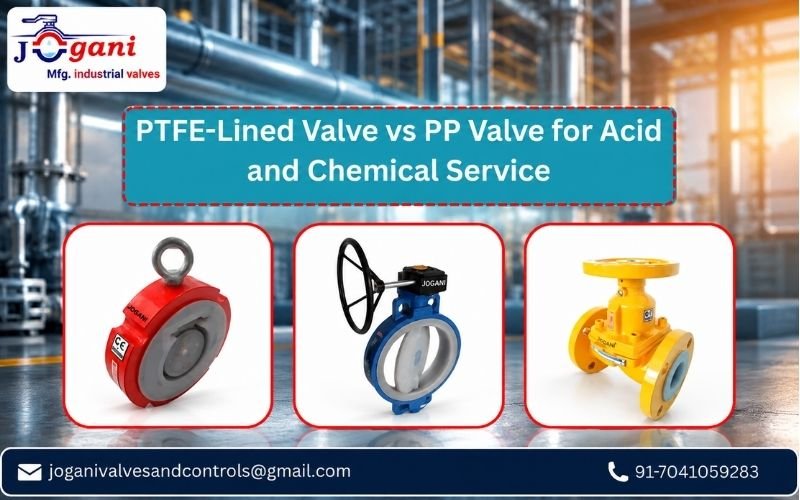
Chemical Resistance Comparison of PTFE-Lined and PP Valves
Selecting a valve for acid or chemical duty is not simply a choice between metal and plastic. The wrong material can lead to corrosion, leakage, frequent replacement, or unplanned shutdowns. That is why process engineers often compare PTFE Lined Valve vs PP Valve before approving a valve for corrosive service.
Both options can work well when the media, concentration, temperature, pressure, and operating method match the valve design. However, they solve different problems.
A
PTFE-lined valve combines a strong valve body with a chemically resistant lining, while a PP valve uses polypropylene as the main body material. Understanding this difference helps buyers choose with less risk.
Start With the Chemical, Not the Valve Material
The first question should be: what exactly flows through the line? Acid name alone is not enough. Concentration, temperature, pressure, cleaning chemicals, and operating cycles can change material compatibility.
A PP valve for acid service may suit many compatible acids and alkalis. However, demanding temperature or pressure conditions may require another design. Therefore, check complete service data before comparing prices.
Where PTFE-Lined Construction Adds Value
A PTFE lined valve for chemical service is often considered for highly corrosive or aggressive fluids. The lining keeps process media away from the metallic pressure-containing body.
This design can provide corrosion resistance without using a solid high-alloy valve. A
PTFE Lined Ball Valve is especially useful where quick isolation and tight shut-off matter.
Chemical plants, pharmaceutical units, fertilizer facilities, petrochemical systems, and acid-processing plants often evaluate lined valves for demanding duties.
When a PP Valve Can Be the Practical Choice
Polypropylene valves offer corrosion resistance with lightweight, non-metallic construction. They can suit chemical transfer, dosing, water treatment, tank connections, and selected acid or alkali lines.
In addition, PP can simplify installation in compatible piping systems. On the other hand, buyers must respect pressure-temperature limits.
A lower purchase price gives little value if the PP grade, seat, or seal does not suit the actual chemical.
PTFE Lined Valve vs PP Valve: Five Selection Checks
Before approving either option, review these points:
- Chemical name and concentration
- Normal and maximum operating temperature
- Working and design pressure
- Valve size, connection, and operating frequency
- Seat, seal, lining, and body compatibility
Most importantly, never select a valve only by body material. A suitable body with an incompatible seal can still cause early leakage or failure.
This is especially important during valve selection for corrosive chemicals, where every wetted component matters.
What Gujarat Buyers Should Send With an Enquiry
Procurement and EPC teams should provide the media, concentration, temperature, pressure, line size, end connection, actuation requirement, quantity, and installation details.
Along with this, ask about lining quality, testing, dimensional requirements, and available material combinations. For a PTFE Lined Ball Valve, also confirm the wetted parts and sealing arrangement.
Jogani Valves And Controls manufactures and supplies industrial valves from Ahmedabad, Gujarat. Buyers can share actual process conditions to discuss a suitable configuration instead of selecting only from a catalogue description.
Conclusion
The PTFE Lined Valve vs PP Valve decision should depend on chemical compatibility and real operating conditions. PP can be practical for many compatible chemical lines, while PTFE-lined construction may suit more demanding corrosive duties.
For product details, size options, material guidance, quotations, or bulk requirements, contact
Jogani Valves And Controls with your media, pressure, temperature, and pipeline details.
Frequently Asked Questions