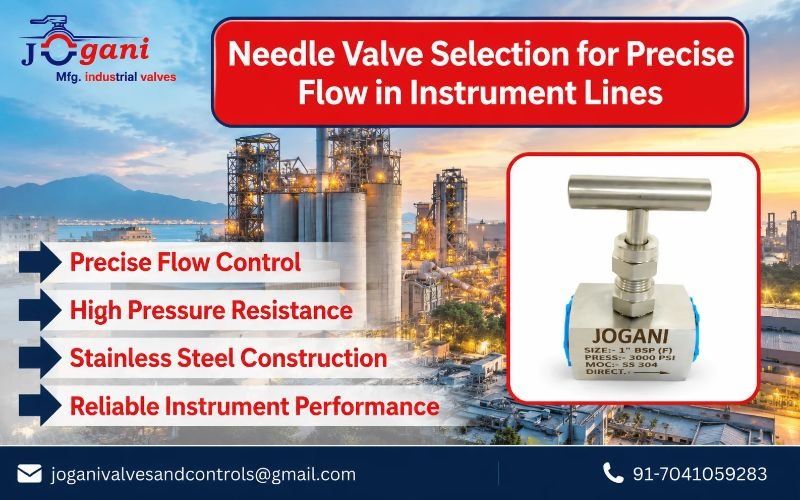
How to Choose a Needle Valve for Accurate Flow Control
Small instrument lines often need more than a simple on-off valve. A sampling point may require gradual adjustments while a pressure gauge needs reliable isolation. Choosing the
needle valve can lead to unstable flow, leaks or difficult maintenance.
The correct way is to match the needle valve to the fluid, pressure, temperature, flow requirement and connection type. A tapered stem allows operators to adjust a passage gradually rather than changing the flow suddenly.. Not all needle valves offer the same level of control or sealing performance.
For engineers and procurement teams reviewing these details before ordering helps protect measurement accuracy. Reduces unnecessary replacements across industrial setups.
Where Fine Flow Control Matters Most
A needle valve works well when an operator must make controlled adjustments. The threaded stem moves a tip closer to or farther from a seat changing the opening in a smooth progressive way.
Common uses include instrument sampling, analyzer feeds, gas purging, calibration setups and certain pressure-gauge connections. These roles show up in oil and gas chemical plants, power generation, water treatment and laboratories.
The narrow passage creates pressure drop and full strokes take longer than with quarter-turn valves.
Needle Valve Selection Starts With the Service Conditions
Before comparing prices write down what the valve will handle.
- Fluid: Identify the gas or liquid its concentration, cleanliness and any corrosion risk.
- Pressure: Record operating pressure, maximum possible pressure and differential pressure.
- Temperature: Check both normal and extreme conditions, including startup or cleaning cycles.
- Duty: Decide if the valve will throttle, isolate or do both.
- Flow: Specify the required flow range, not the tubing diameter.
For high-pressure needle valves ask the manufacturer for the pressure-temperature rating of the model. The rated pressure at room temperature may not hold at temperatures. The valve body strength, stem design and packing must all match the service conditions.
Match the Stem and Flow Coefficient to the Job
Connection size does not tell you the flow capacity. Ask for the Cv or flow coefficient, which shows how flow a valve can handle at a given pressure drop.
A lower-Cv valve might allow control at very low flows but it can also restrict a sample line too much. Compare the expected operating flow with the valve’s flow-versus-stem-opening curve if available.
Stem tip design is also important. A regulating or metering profile can improve control at openings. For valves that operate frequently check stem wear, packing position and how easy it is to service.
Stainless Steel, Seals and Connections: Avoid Mismatches
A stainless steel needle valve is often chosen for corrosive or tough process duties.. The right stainless grade must match the fluid chemistry. Some chemicals need an alloy or extra corrosion assessment.
Then look at packing and seat materials. PTFE and graphite-based packing have temperature and chemical limits. Never assume that a stainless-steel body means the whole assembly is suitable for heat.
Finally confirm end connections carefully. NPT, BSP and compression fittings are not interchangeable just because their nominal sizes look the same. For a needle valve for instrument lines verify tubing outside diameter, thread standard, fitting compatibility and available installation space before approving the purchase.
Quality Checks That Protect Instrument Reliability
Review the specification for body material stem construction, seat finish and packing setup.
Ask the supplier what inspections and pressure or seat-leak tests apply to the model. Request inspection records, material certificates and traceability if your project requires them.
During operation avoid forcing the stem into its seat. Follow the manufacturer’s instructions for tightening connections and maintaining packing. These small practices help prevent damage and support instrument performance.
Send a Clear RFQ, Not Just a Valve Size
Include the process medium, operating and design conditions, required flow range, quantity, material preference, connection details, intended duty and project documentation needs. Add a drawing or reference to an existing valve if replacing equipment.
Jogani Valves And Controls an Ahmedabad-based industrial valve manufacturer and supplier offers needle valves for controlled flow applications. Buyers can discuss configurations and request confirmation of ratings, sizes and documentation before ordering.
Conclusion
Successful needle valve selection depends on the instrument duty, not just price or line size. Check compatibility, pressure–temperature limits Cv, stem design and end connections together.
For Instrumentation Needle Valve enquiries, contact
Jogani Valves And Controls with your application details to discuss options, specifications and bulk quotations.
Frequently Asked Questions