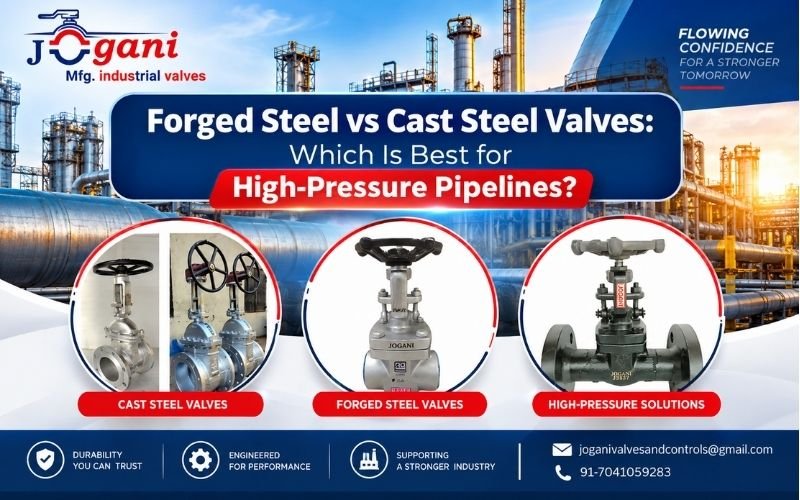
Forged Steel vs Cast Steel Valves for High-Pressure Pipelines
Choosing the right valve for a high-pressure pipeline is not simply a matter of comparing prices. The valve must handle pressure, temperature, fluid conditions and frequent operating demands without creating unnecessary maintenance issues. This is why buyers often compare Forged Steel vs Cast Steel Valves before finalizing a project specification.
Both valve types can be suitable for industrial service. However, their manufacturing methods create differences in body structure, typical size availability, application suitability and cost. For example, forged steel gate valves suit high-pressure service, while cast steel valves work well for larger pipeline sizes and processes.
For plant engineers, EPC contractors and procurement teams, the better choice depends on the actual service conditions rather than the word “forged” or “cast” alone.
Why the Manufacturing Method Matters
Forged Steel Valves are produced by shaping heated steel under controlled force. Forging creates a dense body structure, making forged valves ideal for compact, pressure-resistant designs.
Manufacturers form cast steel valves by pouring molten metal into a mould. This manufacturing route gives manufacturers greater flexibility for larger and more complex valve bodies.
As a result, neither process is automatically better for every pipeline. Choosing the right valve depends on its size, pressure class, temperature, material grade, design standard, and actual operating conditions.
Forged Steel Valve vs Cast Steel Valve: What Should Buyers Compare?
When comparing a Forged Steel Valve vs Cast Steel Valve, buyers should look beyond initial purchase cost.
For high-pressure valve designs, engineers often select forged constructions because they provide a compact and robust solution. Small forged gate valves, for example, are available in ASME Class 800 and 1500 configurations for high-pressure and high-temperature service.
Size: Cast construction becomes increasingly practical for larger valve bodies. Industry product ranges show cast gate valves covering substantially larger sizes than many compact forged designs.
Body design: Forging can support strong, compact valve bodies. Casting can offer design flexibility for larger and more complicated geometries.
Budget: A cast valve may be more economical for certain larger industrial applications. However, the lowest purchase price should never be the only deciding factor.
When a Forged Steel Gate Valve Makes More Sense
A Forged Steel Gate Valve is often considered when the pipeline requires a robust valve in a compact size with demanding pressure conditions.
These valves are commonly specified for isolation duties in oil and gas, refinery, petrochemical and power applications. Forged gate valves are also available in higher pressure classes for specialised services.
For instance, forged steel valve designs may suit high-pressure lines where space is limited and dependable shutoff is important. In addition, suitable seat materials, stem design, bonnet configuration and pressure class can significantly affect service life.
However, buyers should select the complete valve specification rather than choosing based on body construction alone.
Where Cast Steel Valves Can Be the Practical Choice
Cast Steel Valves are widely used when larger valve sizes, broader flow passages or more complex body geometries are required.
Cast steel gate valves are available across a broad range of industrial sizes and pressure classes. Therefore, cast steel valves offer a practical solution for large-diameter pipelines where forged valves may cost more.
At the same time, casting quality matters. Buyers should review material specifications, inspection requirements, pressure testing and applicable design standards before approving a supplier.
High-Pressure Pipeline Selection: A Practical Buyer Checklist
Before ordering High Pressure Steel Valves, review the actual operating conditions.
Start with the line size and required pressure class. Next, check operating and design temperatures. Then confirm the fluid, corrosion conditions and material compatibility.
Along with this, review the valve type and end connection required for the pipeline. A gate valve, ball valve or globe valve serves a different purpose, so the body material alone does not determine performance.
Most importantly, ask the Industrial Steel Valve Manufacturer for dimensional details, material specifications, testing information and applicable standards.
Choosing a Valve Manufacturer in Ahmedabad
Local buyers can simplify communication and supply coordination by choosing an experienced Steel Valve Manufacturer in Ahmedabad for their industrial valve requirements.
Local manufacturers and suppliers can be useful when projects require specification reviews, customised requirements, repeated orders or faster communication. However, buyers should still evaluate manufacturing capability, quality procedures, material control and inspection practices.
Jogani Valves And Controls serves industrial valve requirements for Oil & Gas, Petrochemical, Chemical Processing, Power Generation, Refinery and Process Industries. The focus should always remain on matching the valve construction with the pipeline’s real operating requirements.
Final Verdict: Forged or Cast Steel?
There is no universal winner. Forged steel suits compact, high-pressure applications, while cast steel works well for larger valves and complex industrial designs.
The best valve is the one that matches the pressure class, temperature, size, material and service conditions of your pipeline. For product size, grade, technical specifications or bulk requirements, contact
Jogani Valves And Controls for suitable valve selection and quotation support.
Frequently Asked Questions