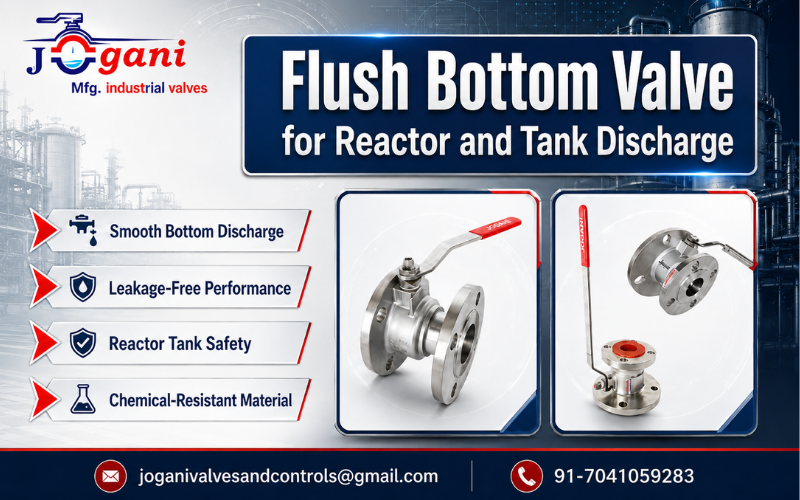
Flush Bottom Valve Selection for Industrial Tanks
In chemical, pharma and process industries, smooth discharge from reactors and tanks is very important. Even a small blockage at the bottom outlet can slow production, waste material or create cleaning issues. A
Flush Bottom Valve helps control bottom discharge safely and efficiently.
It is mainly used where liquids, slurry, semi-solid material or processed media need to be drained from the lowest point of a reactor or tank. For buyers, the main challenge is not only choosing a valve, but choosing the right design, material and manufacturer. Therefore, this guide explains the practical points to check before buying a flush bottom valve for industrial use.
Why Bottom Discharge Needs the Right Valve Design
Reactor and tank discharge is different from normal pipeline flow. The valve must sit close to the tank bottom and allow material to flow without dead space. If the design is not proper, material can remain inside the vessel.
In many cases, this creates product loss, contamination risk and extra cleaning time. A tank bottom valve or reactor bottom valve should offer smooth opening, strong sealing and easy operation. Most importantly, it should match the process media and working conditions.
Flush Bottom Valve Options for Reactor and Tank Use
A Flush Bottom Valve is available in different designs depending on the application. For example, a Y Type Flush Bottom Valve is commonly used where angled flow and easy discharge are required. On the other hand, a Flush Bottom Ball Valve may suit specific processes where quick operation and tight shut-off are important.
For reactors, the valve must handle temperature, pressure and process chemicals. For tanks, discharge speed, cleaning ease and leakage prevention matter more. Because of this, buyers should share media details, tank design and connection type before finalizing the valve.
Material Quality Matters More Than Price Alone
Industrial flush bottom valves often work with chemicals, solvents, acids, slurry or processed liquids. Therefore, material selection plays a major role in valve life. Common material choices may include stainless steel, cast steel or other suitable grades based on the application.
In addition, seat material, gland packing, stem quality and surface finish should be checked carefully. A low-cost valve may look attractive at first. However, poor material can increase leakage, maintenance cost and downtime. For this reason, purchase managers should compare technical quality, not only price.
Practical Checks before Bulk Purchase
Before placing a bulk order, buyers should check a few practical points. First, confirm the valve size, pressure rating and end connection. Then check whether the valve is suitable for the tank or reactor bottom design.
Also review operation type such as manual, pneumatic or actuator-operated design. In addition, ask about test reports, dimensional accuracy and finishing quality. These details help EPC contractors, process engineers and maintenance teams avoid fitting problems at site.
Important details to share with the manufacturer
Share the media name, working temperature, pressure, quantity and required material grade. Along with this, provide tank or reactor drawing if available. This helps the manufacturer suggest a better bottom discharge valve for your process.
Industries Where This Valve Gives Real Value
Flush bottom valves are widely used in the chemical industry, pharmaceutical industry, food processing industry, petrochemical industry, paint and coating industry, fertilizer industry and process equipment industry.
In pharma and food plants, clean discharge and hygiene matter. In chemical and petrochemical units, corrosion resistance and sealing quality become more important. Similarly, paint, coating and slurry applications need valves that reduce clogging and support smooth flow.
Local Buying Support in Ahmedabad and Gujarat
Many buyers search for a Flush Bottom Valve Manufacturer in Ahmedabad or Flush Bottom Valve in Gujarat because local support makes communication easier. Industrial buyers often need quick technical discussion, custom size guidance and faster supply coordination.
Jogani Valves And Controls, based in Ahmedabad, Gujarat, India, supports customers as a manufacturer, supplier and exporter of industrial process valves. The company helps buyers select suitable valve design, material and size according to reactor, tank and process requirements.
Maintenance Tips for Longer Valve Life
Regular inspection improves valve performance. Check leakage, handle movement, seat condition and gland packing at planned intervals. Moreover, clean the valve area properly when working with sticky or crystallizing media.
Do not force the valve if movement becomes tight. Instead, inspect the cause and service it on time. As a result, the valve can perform better and reduce sudden breakdowns during production.
In conclusion
A
Flush Bottom Valve plays an important role in safe, clean and efficient reactor and tank discharge. The right valve design can reduce blockage, improve material recovery and support smooth plant operation. Before buying, customers should check material, size, sealing, operation type and manufacturing quality. For product details, grade selection, quotation or bulk requirements, you can contact
Jogani Valves And Controls for practical guidance.
FAQs