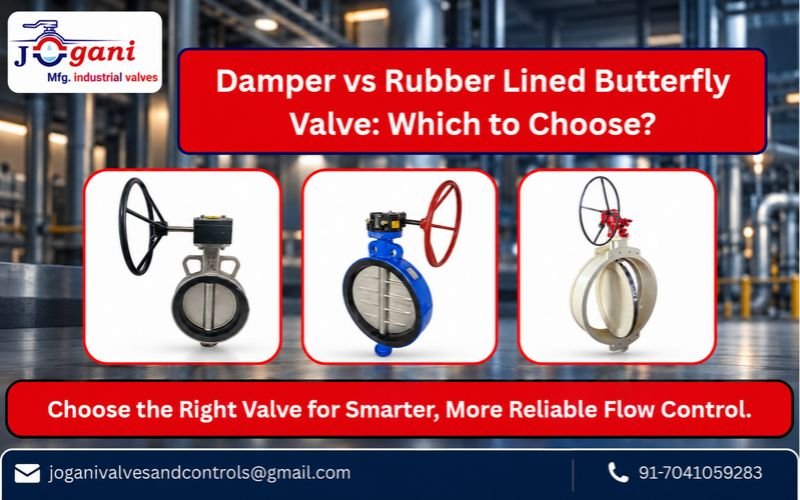
Damper vs Rubber Lined Butterfly Valve: Key Differences
Choosing the valve is essential for safe and efficient industrial operations. Many buyers become confused when they compare a Damper with a
Rubber Lined Butterfly Valve. Both use a rotating element to control flow. The designs and uses can differ a great deal. A Damper is usually used to regulate or isolate air and gases in duct systems whereas a
Rubber Lined Butterfly Valve is usually used for pipelines that need good sealing.
The right choice depends on the operating medium, pressure, temperature, leakage needs and installation conditions. Knowing these differences helps engineers, procurement managers and plant operators pick a valve that matches their real process needs.
What Is the Difference Between a Damper Valve and a Rubber Lined Butterfly Valve?
The main difference between a Damper and a
Rubber Lined Butterfly Valve lies in the applications. Sealing needs. A
Damper Valve is usually used to control or isolate airflow and gas flow through ducts and gas‑handling systems. A
Rubber Lined Butterfly Valve uses a rubber lining or seat to control flow and give shut‑off.
Damper Valves are often made for ventilation, exhaust and industrial gas use. Damper Valves construction can use steel, stainless steel or other materials based on the operating conditions. Damper Valves sealing design also changes with the needed leakage performance.
Rubber Lined Butterfly Valves usually have a metal body.
Disc with a rubber lining or elastomeric seat. This setup lets the disc seal against the seat when the valve closes.. The real sealing performance depends on the valve design, the rubber compound and the operating conditions.
When Should You Choose an Industrial Damper Valve?
An Industrial Damper Valve is a choice when a plant must regulate, isolate or redirect air and gas flow. Depending on Industrial Damper Valve design Industrial Damper Valve can help manage airflow through ventilation ducts, exhaust systems, combustion equipment and industrial gas‑handling installations.
Damper Valves come in configurations, such as single‑blade and multi‑blade designs. Damper Valves correct configuration depends on duct size, operating pressure, gas temperature, needed flow control and the space where Damper Valves will be installed.
For example power generation plants may use Damper Valves to manage flue‑gas flow. Cement and steel plants may need Damper Valves for exhaust systems, dust collection and industrial ventilation. HVAC installations also use Damper Valves to control airflow through duct networks.
Why Is a Rubber Lined Butterfly Valve Suitable, for Liquid Pipelines?
A Rubber Lined Butterfly Valve is usually chosen for liquid‑handling applications where a compact installation, simple operation and good seat sealing matter.
The rubber lining or elastomeric seat makes a seal when the disc turns into the position.. Not every rubber compound works for every fluid. The chosen material must stand up to the liquid’s chemical composition, concentration and operating temperature.
Water‑treatment plants, utility pipelines and compatible industrial‑liquid systems are uses. Some chemical‑processing applications may also use Rubber Lined Butterfly Valves when the lining material fits the process needs.
Five Important Checks Before Selecting an Industrial Valve
Choosing the valve becomes easier when you know the real operating conditions.Choosing the valve becomes easier when you know the real operating conditions.
1. Identify the operating medium
Find out whether the system carries air, flue gas, water, wastewater or a chemical solution. Note any suspended solids, abrasive particles or other special conditions that may affect valve performance.
2. Confirm pressure and temperature
Check the maximum operating pressure and temperature. Pressure swings and temperature changes can affect the performance of the valve body sealing parts and actuator.
3. Define the sealing requirement
Decide if the application needs flow regulation, isolation or a particular shut‑off performance. Ask the supplier to confirm the leakage classification and supporting test documentation.
4. Check material compatibility
Check the body and disc materials, rubber compound, flange standard and installation dimensions. The selected materials must match the operating environment.
5. Select the operating mechanism
Depending on the application the valve may use manual operation, a gearbox, a pneumatic actuator or an electric actuator. Consider operating frequency, accessibility and automation requirements when making your decision.
These checks help reduce selection errors and avoidable maintenance. They also give suppliers the information needed to recommend a valve configuration.
Which Industries Use Damper and Rubber‑Lined Butterfly Valves?
HVAC and industrial ventilation systems commonly use dampers to regulate airflow and isolate duct sections. Power plants may require damper designs for combustion‑air and flue‑gas management.
Cement and steel manufacturing facilities use gas‑handling, exhaust and dust‑collection systems where appropriately designed dampers may be required.
Water and wastewater treatment plants often use butterfly valves for compatible liquid pipelines. Their compact construction and sealing arrangement can make them suitable for utility applications.
Chemical and process industries need care during valve selection. Buyers must verify compatibility, pressure, temperature and sealing performance before choosing either valve type.
Choosing an Industrial Valve Supplier in Ahmedabad, Gujarat
Buyers in Ahmedabad and across Gujarat can simplify procurement by sharing complete technical requirements with their valve supplier. Clear specifications help identify the appropriate valve type, configuration and materials.
Jogani Valves & Controls based in Ahmedabad, Gujarat provides industrial valve solutions for applications. Buyers can review the product information and discuss their requirements before finalising an order.
Conclusion
Choosing between a damper and a rubber‑lined butterfly valve starts with understanding the operating medium, pressure, temperature and sealing requirements. A damper valve is commonly suitable for controlling air and gases while a rubber‑lined butterfly valve often suits liquid pipelines that require effective shut‑off.
The right Damper Valve vs Rubber‑Lined Butterfly Valve decision should always follow the actual process specifications than assumptions based on appearance alone. For requirements in Ahmedabad, Gujarat or elsewhere in India contact
Jogani Valves & Controls to discuss the required valve type, dimensions, materials and operating conditions before requesting a quotation.
Frequently Asked Questions