Key Differences Between Conical and Y Strainers
Pipeline filtration is not a one-design decision. During commissioning, weld slag, rust flakes and construction debris can quickly damage a pump, control valve or meter. Once the plant is running, the concern shifts to routine protection with manageable cleaning. That is why the Conical Strainer vs Y Strainer choice matters to process and maintenance teams.
A temporary conical strainer gives strong short-term protection at a critical start-up point. A
Y strainer stays in the line and collects debris during normal service. The better option depends on fluid, installation space, cleaning access, pressure drop and whether the duty is temporary or continuous. Selecting only by price can create avoidable downtime later.
Start-Up Cleaning and Everyday Filtration Are Different Jobs
A
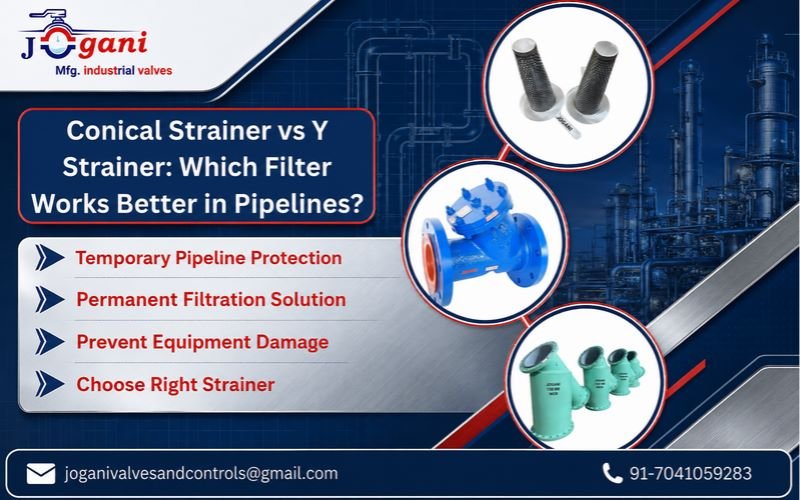
conical strainer is usually installed between pipeline flanges during commissioning or after major maintenance. Its cone-shaped perforated screen catches large debris before it reaches sensitive equipment. Once the system runs clean, the team can remove it.
A Y type strainer for pipelines is a permanent inline unit with a screen housed in its angled branch. It supports recurring filtration and allows planned cleaning. In simple words, choose a conical design for temporary protection and a Y design for ongoing service.
Conical Strainer vs Y Strainer: Match the Filter to the Job
The key difference is service intent. A temporary conical strainer suits flushing, hydrotesting support, line start-up and temporary pump protection. It has a compact form and needs no additional line body.
However, a Y strainer filters continuously after commissioning. Maintenance staff can open the cover, remove the screen and clean it at scheduled intervals. For this reason, it works well where solids appear gradually during operation.
Neither design is automatically better. A clean new line may only need a conical strainer for a short period. A utility line that must remain protected every day generally needs a Y strainer.
Fit-Up Conditions Can Decide the Better Design
Conical units require accessible flanged joints and a correctly matched bore, flange class and flow direction. The cone orientation also matters. A pointed cone can retain debris differently from a flat cone, so engineers should select it for the cleaning method and allowable pressure loss.
On the other hand, a
Y strainer needs enough clearance around its screen cover for removal. Installation position, drain access and branch orientation affect maintenance time. Check these details on the piping layout before releasing a purchase order.
Screen Detail Is Where Protection Meets Pressure Drop
Mesh size should protect the downstream item without choking the process. Fine mesh captures smaller particles, yet it can create a faster differential-pressure rise. Therefore, match the perforation and mesh to the valve seat, pump, nozzle or instrument being protected.
Material selection deserves equal attention. Carbon steel can suit compatible general services, while stainless steel often helps in corrosive or hygiene-sensitive duties. Ask for the required material, screen construction, nominal size, end connection, design pressure and temperature with the inquiry. A reliable Y type strainer manufacturer should also clarify cleaning frequency and replacement-screen availability.
Industrial Scenarios That Point to Each Option
Conical strainer applications are common before pumps, control valves, flow meters and equipment that needs clean commissioning. Chemical and specialty-chemical plants, refineries, oil and gas facilities, boiler feed lines and power projects often use them for start-up protection.
Y strainers are practical for water-treatment, ETP/STP, steam, utility water, food processing and pharmaceutical lines where routine debris control matters. They also support pulp and paper, paint, ink, dyes, steel, mining and marine systems. At the same time, process compatibility should always decide the final material and screen grade.
A Better Purchase Brief for Ahmedabad and Gujarat Projects
For EPC teams and buyers in Ahmedabad, a complete specification reduces revision cycles. Share the line size, medium, flow direction, operating pressure, temperature, flange standard, desired filtration level and temporary or permanent duty. Include the drawing when space is tight.
Jogani Valves And Controls supports industrial strainer requirements alongside its valve range from Ahmedabad. The company can review fit-up details and discuss practical material or screen options for Gujarat and India projects. Most importantly, confirm inspection expectations and delivery needs before placing a bulk order.
Make the Practical Selection Before the Line Goes Live
The Conical Strainer vs Y Strainer decision becomes simple when the duty is defined. Use a conical strainer to protect equipment during commissioning, flushing or temporary clean-up. Choose a
Y strainer when the pipeline needs a maintainable filter for daily operation. Contact
Jogani Valves And Controls for sizing details, material guidance or a quotation for a project or bulk requirement.
Frequently Asked Questions