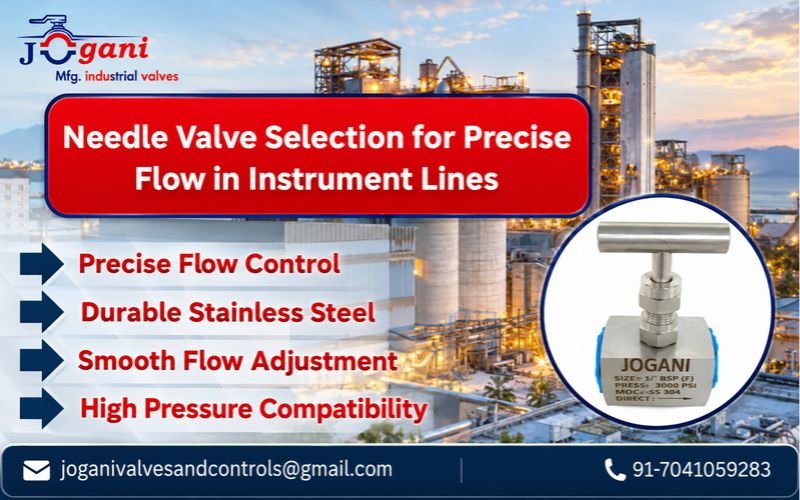
How to Select a Needle Valve for Accurate Flow Control
An instrument line may carry a small amount of fluid but even a small change in flow can impact sampling, measurement or process stability. That’s why choosing the needle valve is a critical decision for engineers and maintenance staff. The valve must allow flow adjustments without causing leaks pressure drops or maintenance issues.
The best valve depends on the fluid being used the operating pressure, the temperature the required flow range and the connection type. A stainless steel needle valve can be a choice in many tough environments but just using stainless steel does not mean it will work in every situation.
Before ordering buyers should compare the valve specification with the actual operating conditions instead of choosing a model based only on nominal size.
When an Instrument Line Needs Controlled Adjustment
A
needle valve works by moving a stem into or out of a small seat opening. Turning the handle slowly changes the opening size giving operators control than a standard quarter-turn isolation valve. This makes it ideal for adjustments.
An instrumentation needle valve is often used at sampling points, pressure gauge connections, analyzer lines and utility circuits.. Not all needle valves provide the same level of precision.
Some are built for shut-off or rough flow control while others are designed for accurate metering. Start by defining what the valve needs to do.
Needle Valve Selection Begins With Operating Conditions
Before looking through catalogs gather these six details:
Fluid: Name the gas or liquid note its concentration and check for contamination or corrosive risks.
Pressure: Record pressure, maximum pressure and any possible pressure differences.
Temperature: Include temperatures during startup, shutdown and any unusual operating events.
Flow: Specify the minimum, normal and maximum flow rates needed.
Connections: Confirm the tubing size, thread type and fitting style.
Duty: Decide if the valve will be used for isolation, occasional adjustments or frequent metering.
For example a sampling line that needs fine tuning may require a different stem design than a valve that only opens during maintenance. These details help suppliers recommend a design instead of making guesses based on pipe size.
Stainless Steel Grades Are Only Part of the Decision
A stainless steel needle valve can offer mechanical performance and resistance to corrosion. SS 304 and SS 316 are choices in industry but their effectiveness depends on the process fluid. SS 316 may offer resistance in some corrosive environments but it is not immune to chloride damage.
Also consider the stem, seat, packing and other parts that come into contact with the fluid. Their material compatibility is just as important as the body material.
In chemical service even a strong valve body can fail if the seals are not right. Ask for a list of materials and verify compatibility with the actual fluid.
How Cv and Stem Design Influence Precise Flow
For a needle valve meant for flow control, size alone doesn’t tell the full story. The flow coefficient or Cv shows how fluid the valve can pass under set conditions. Engineers use this value along with pressure drop and fluid characteristics to judge if the valve fits the operating range.
A valve with much capacity can make low-flow control hard to manage. On the hand a valve that is too small can cause high pressure loss. The shape of the stem and the amount of travel also affect how well the valve can be controlled.
Ask for flow data or curves especially when small changes matter, like in gas sampling or analyzer service.
Check Pressure Ratings, Packing and End Connections Together
A high-pressure needle valve must meet the system’s operating conditions, not just a nominal pressure rating. Temperature can lower the pressure and packing and seat materials may have different limits.
Look at the assembly rating, including end connections and compatible tubing. Confirm if the design uses NPT threads another thread type or tube fittings-these are not interchangeable.
Packing is equally important. Depending on the design, leakage, operating torque, temperature resistance and maintenance access can vary. Ask what test documents and installation instructions the supplier can provide.
Buying for Instrumentation Projects in Ahmedabad and Gujarat
For EPC contractors and industrial procurement teams a clear technical request saves time. Avoids repeated quotes. Share the name, operating range, line drawing, connection details, required quantity and any project-specific standards.
Compare offers based on documented specifications, not price. Ask about traceability, inspection reports, spare parts availability and delivery plans where they impact the project.
Conclusion: Select for Performance, Not Just Price
Jogani Valves And Controls is an industrial valve manufacturer and supplier based in Ahmedabad. They serve process-related needs across Gujarat and India. Buyers can contact the company to discuss their valve requirements and confirm if the requested
SS needle valve configuration is available.
Good needle valve selection matches flow behavior, material compatibility, pressure, temperature and connection type to real-life service conditions. A prepared requirement sheet helps reduce mistakes and supports safer more reliable operation.
Frequently Asked Questions