Choose the Right Sight Glass for Your Process
In a process plant, operators often need a simple way to see what is happening inside a pipeline without opening it. A Tubular vs Double Window Sight Glass comparison becomes important when selecting the right visual monitoring arrangement for a process line. Both designs help operators observe flow conditions, but their construction and viewing arrangement can suit different applications. A sight glass may be used to check liquid or gas movement, colour, clarity, bubbles, or visible process changes.
For buyers, the decision should not depend only on price or appearance. Line size, pressure, temperature, process media, glass type, body material, connection and maintenance access all deserve attention.
Start With the Viewing Requirement, Not Just the Product Name
A
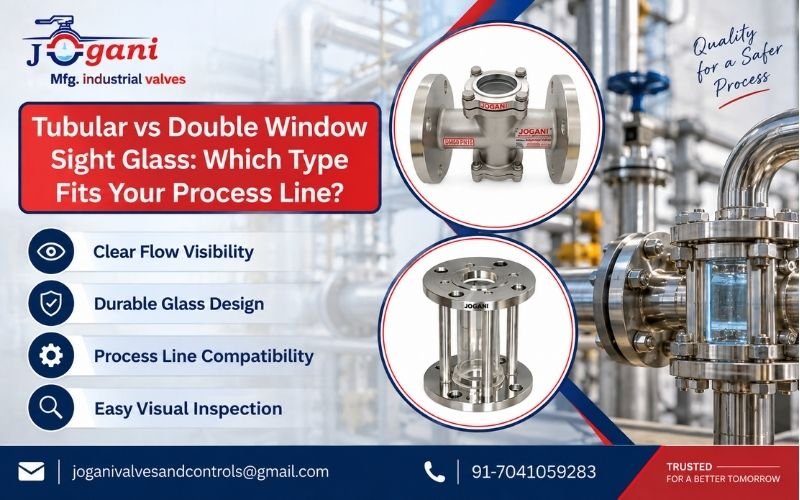
Tubular Sight Glass uses a transparent tubular viewing section integrated into the pipeline assembly. Its design can provide a direct view of the process medium along the tube. This makes it useful where continuous visual observation is important and the piping arrangement supports a tubular construction.
A
Double Window Sight Glass, on the other hand, uses two opposing viewing windows. This arrangement allows direct visual observation and can improve visibility when light needs to pass through the process medium.
Tubular vs Double Window Sight Glass: What Changes in Practice?
The main difference is the viewing arrangement and mechanical construction.
With a Tubular Type Sight Glass Valve, the process can be viewed through the tubular section. Buyers should pay close attention to glass protection, sealing, body construction and the manufacturer’s stated pressure and temperature limits.
A Double Window Sight Glass places two windows opposite each other. This can be helpful when operators need a clearer visual path across the process line. It is commonly used for checking flow presence, condition and movement in industrial pipelines.
In simple words, choose based on how you need to see the process, not simply on whether the product has one or two viewing areas.
Material and Rating Can Make a Bigger Difference Than Design
The viewing design is only one part of selection. Body material and glass quality directly affect suitability for the service.
Depending on the application, industrial sight glass assemblies may be supplied with carbon steel or stainless-steel bodies and toughened borosilicate glass. However, the actual material grade, pressure rating, temperature limit and gasket material must match the process conditions.
For example, chemical service may require careful compatibility checks, while pharmaceutical or food-processing applications may place greater emphasis on clean finish and suitable sealing materials. Therefore, buyers should provide complete operating information before ordering.
Where Each Design Can Fit
Sight glasses are used across chemical, petrochemical, pharmaceutical, food-processing, oil and gas, water treatment, power and general process applications. Jogani Valves And Controls also identifies these sectors among the applications for its sight glass solutions.
A tubular arrangement can make sense where its viewing geometry and installation format fit the line. Double-window designs can be useful where opposing visual access and improved light transmission are valuable.
Importantly, a Sight Flow Indicator provides visual confirmation rather than automatically giving a calibrated flow-rate measurement.
A Practical Buying Checklist for Industrial Buyers
Before finalising a sight glass for process pipeline service, check:
- Pipeline size and connection standard
- Process media and chemical compatibility
- Operating and design pressure
- Operating and design temperature
- Body material and glass specification
- Gasket or sealing material
- Available installation space
- Cleaning and maintenance requirements
- Inspection and testing requirements
For bulk orders, EPC projects and replacement requirements, sharing these details with the manufacturer can reduce specification errors and installation issues.
Why Local Manufacturing Support Matters in Gujarat
For buyers in Ahmedabad and across Gujarat, local technical communication can simplify product selection, especially for custom or bulk requirements. Jogani Valves And Controls is an ISO 9001:2015 certified engineering company established in Ahmedabad and manufactures industrial valves, strainers and flow-control solutions for chemical, water, steam and process applications.
A manufacturer can review the process conditions, required size and connection details before recommending a suitable sight glass configuration.
Conclusion
The right choice in a
Tubular vs Double Window Sight Glass comparison depends on your process conditions, viewing requirement and installation arrangement. Good glass quality, suitable materials, proper sealing and correct pressure-temperature selection are equally important. For product specifications, size, grade, quotation or bulk requirements, contact
Jogani Valves And Controls to discuss your process-line requirements.
Frequently Asked Questions